The practical answer
Use situation, task, action and result to organize a real example. Choose it for the question being asked, explain your own decisions, and keep the outcome accurate.
Give each part of STAR a job
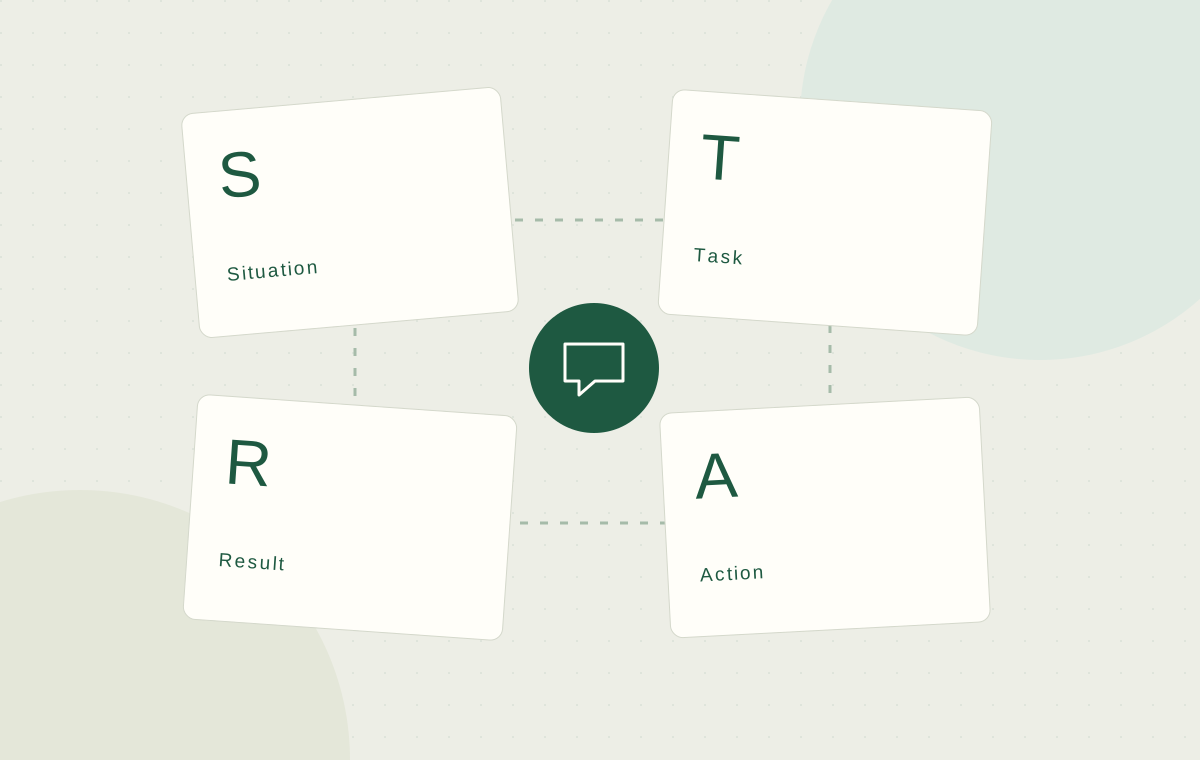
The situation gives the listener enough context. The task explains what you were responsible for. The action describes what you did and why. The result tells them what happened. MIT’s career guidance includes STAR as a structure for behavioral interview preparation.
Spend enough time on your actions that the interviewer can understand your judgment. A long description of a difficult project followed by “we got it done” leaves your contribution unclear.
You can acknowledge a shared result while explaining your part. Use “we” for the team’s work and “I” for a decision or action that was yours. A result can be incomplete or disappointing if that is what happened.
Choose stories from the job description
Read the responsibilities and identify situations the role may involve. A job that includes cross-team delivery gives you a reason to prepare a coordination example. A role with customer escalations suggests preparing a story about handling a difficult case.
Write possible practice questions beside those responsibilities. These are rehearsal prompts, not predictions of what the interviewer will ask. Choose examples from work, study, volunteering or personal projects and name the setting honestly.
| Responsibility in the posting | A practice question |
|---|---|
| Coordinate delivery across teams | Tell me about a time two teams had different priorities. |
| Handle customer escalations | Describe a difficult case and how you decided what to do. |
| Improve reporting | Tell me about a report you changed after receiving feedback. |
Work through one example
This fictional example is about a project coordinator whose launch date stayed fixed while a supplier’s delivery slipped. The team changed the launch scope. The coordinator did not negotiate the supplier contract or make the final launch decision.
Situation: a delayed supplier delivery put part of the planned launch at risk. Task: the coordinator needed to give the project lead an accurate view of the dependencies and available options.
Action: they checked affected tasks with the owners, updated the dependency list and presented the project lead with a smaller launch scope and a later full launch. Result: the lead chose the smaller scope, which the team delivered on the planned date. The remaining work was scheduled separately.
When a supplier delivery slipped, I checked the affected tasks with their owners and updated our dependency list. I presented our project lead with two options: a smaller launch on the planned date or a later full launch. The lead chose the smaller scope. We delivered that scope on time and scheduled the remaining work separately.
The answer explains the coordinator’s actions, preserves the project lead’s decision and states the limit of the result. It does not turn a partial launch into completion of the entire project.
Practice the questions after the first answer
Say the answer aloud from a few notes. Listen for places where you get lost in context or skip a decision. You want enough familiarity to adapt when the question changes, without reciting a script that answers a different question.
Ask yourself why you chose that action, what alternatives you considered and what you would do differently. If the result is a number, be ready to explain how it was measured. If you did not measure the outcome, say what you observed.
STAR is useful for questions about past behavior. Technical exercises, case interviews and questions about motivation may need a different structure. Listen to what is being asked before choosing a prepared example.
Keep notes for the next conversation
After an interview, record the questions you were asked, the examples you used and anything you promised to follow up on. Add what you learned about the role. A later interviewer may explore a different part of the same experience.
Keep those notes with the job description and submitted resume. Before the next round, check for new information that changes which examples are most relevant. If someone clarified a responsibility, use that detail to focus your preparation.
Before you move on
0 of 4 checkedUse this checklist for the application you are working on.
Sources and further reading
Interview preparation resources, including a STAR worksheet and sample questions.
Examples are fictional teaching material created by Evarlio. They are not customer stories or reported hiring outcomes.