The practical answer
Extract named skills, tools, qualifications and responsibilities. Keep the terms you can support, explain them in context, and leave unsupported requirements visible as gaps.
Read the sentence around the keyword
“Experience with SQL is required” and “an interest in learning SQL” describe different expectations. Copy the requirement with enough of its sentence to preserve that meaning. A list of isolated words loses the level of experience the employer is asking for.
Look for named tools, methods, credentials and repeated responsibilities. Then separate requirements from preferences. Keep eligibility questions, such as a required license or work location, in their own notes so they do not disappear into a skills list.
Do not assume every repeated phrase deserves space on your resume. A company may repeat its values throughout a posting. A specific task such as maintaining a forecast is more useful to match with an example of your work.
Turn the posting into a workable shortlist
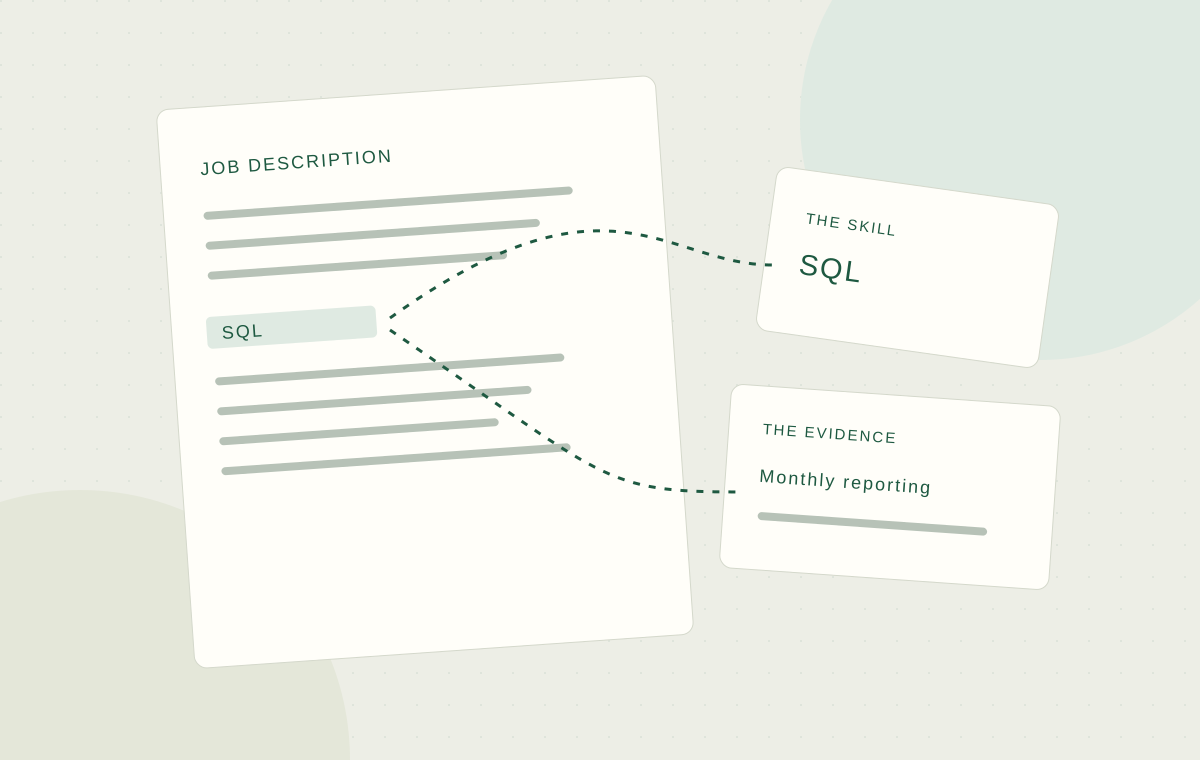
In this fictional analyst posting, the employer asks for SQL queries, monthly reporting and explanations for people outside the analytics team. Tableau is preferred. The applicant uses SQL and Excel at work and has used Tableau only in a personal project.
That difference belongs in the draft. Professional reporting experience and a personal project can both be relevant, but they should not be presented as the same kind of experience.
| Posting phrase | Evidence to look for | Where it may fit |
|---|---|---|
| Write SQL queries | A query you wrote and what it answered | An experience bullet and the skills section |
| Monthly reporting | The report, its audience and your responsibility | An experience bullet |
| Explain findings to stakeholders | A briefing or decision you supported | The context of a reporting example |
| Tableau preferred | A personal dashboard project | Projects, clearly labeled as personal work |
Put the term inside an example of your work
Use the employer’s exact term when it names the same thing you did. SQL can stay SQL. Do not replace Excel with Tableau to match the posting, or call basic spreadsheet work “advanced financial modeling” unless that is what it involved.
For an acronym that may be unfamiliar, write the full term once with the abbreviation in parentheses. Keep normal wording elsewhere. Repeating a phrase in every bullet makes the experience harder to read.
Wrote SQL queries for the monthly retention report and explained account-level changes to account managers.
The sentence shows how the applicant used SQL and communicated findings. It does not claim that the report improved retention.
Decide what to do with a missing keyword
A gap is useful information. If a required skill is missing, decide whether you have closely related experience worth explaining, whether you can meet the requirement, or whether another role is a better fit. A wording change cannot supply a qualification.
Related tools need careful labeling. Experience with one CRM may help you learn another, but it does not mean you have used the second system. Name the system you know and describe the transferable task. Put a course or practice project in its own section if it helps explain what you have learned.
For a preferred skill, your existing strengths may still justify applying. Keep the distinction between “required” and “preferred” in your notes and answer application questions accurately.
Read the resume without the keyword list
Close the posting for a moment and read your resume as a document. Does it describe work a colleague would recognize? Remove phrases that sound impressive but do not explain anything, such as “results-driven strategic professional.” Replace them with a relevant responsibility or deliverable when you have one.
Then reopen the posting and check your main matches. A short evidence table is more useful for this review than chasing a universal keyword percentage. It also gives you a starting point for the interview: each supported requirement should have a story behind it.
Before you move on
0 of 4 checkedUse this checklist for the application you are working on.
Sources and further reading
Guidance on describing work experience with relevant terms from the job posting.
Examples are fictional teaching material created by Evarlio. They are not customer stories or reported hiring outcomes.