The practical answer
Name what you did, give enough context to make it specific, and include an outcome only when you can support it. A clear deliverable is useful evidence even without a percentage.
Find the details before polishing the sentence
Start with a project you remember clearly. What was unfinished or difficult? What did you personally do? What existed afterward? Write rough answers in ordinary language. You can choose an action verb after you know what the sentence needs to say.
Look for evidence in material you are allowed to use, such as your own notes, an approved project summary or feedback you received. Keep confidential details out of the resume. You can usually describe the type of work and your responsibility without naming a client or sharing an internal figure.
If you do find a number, check what it measures and whether it belongs to your work or the whole team. A team’s annual revenue is not automatically a result of your project.
Use scope and deliverables when results are unmeasured
A bullet can tell the reader who used your work, how often you did it, which tool you used or what you produced. Include only the details you know. You do not need all of them in every sentence.
For example, “wrote a handover guide for new support agents” is more informative than “improved operational excellence.” If the guide was adopted for onboarding and you know that happened, include it. If you do not know whether it reduced training time, leave that claim out.
| If you know… | You can describe… |
|---|---|
| Who used the work | A report for account managers or a guide for new hires |
| The cadence | A weekly reconciliation or monthly review |
| The deliverable | A dashboard, checklist, handover guide or working prototype |
| An observed outcome | A resolved issue or adoption of the deliverable, if verified |
Turn a routine responsibility into a specific bullet
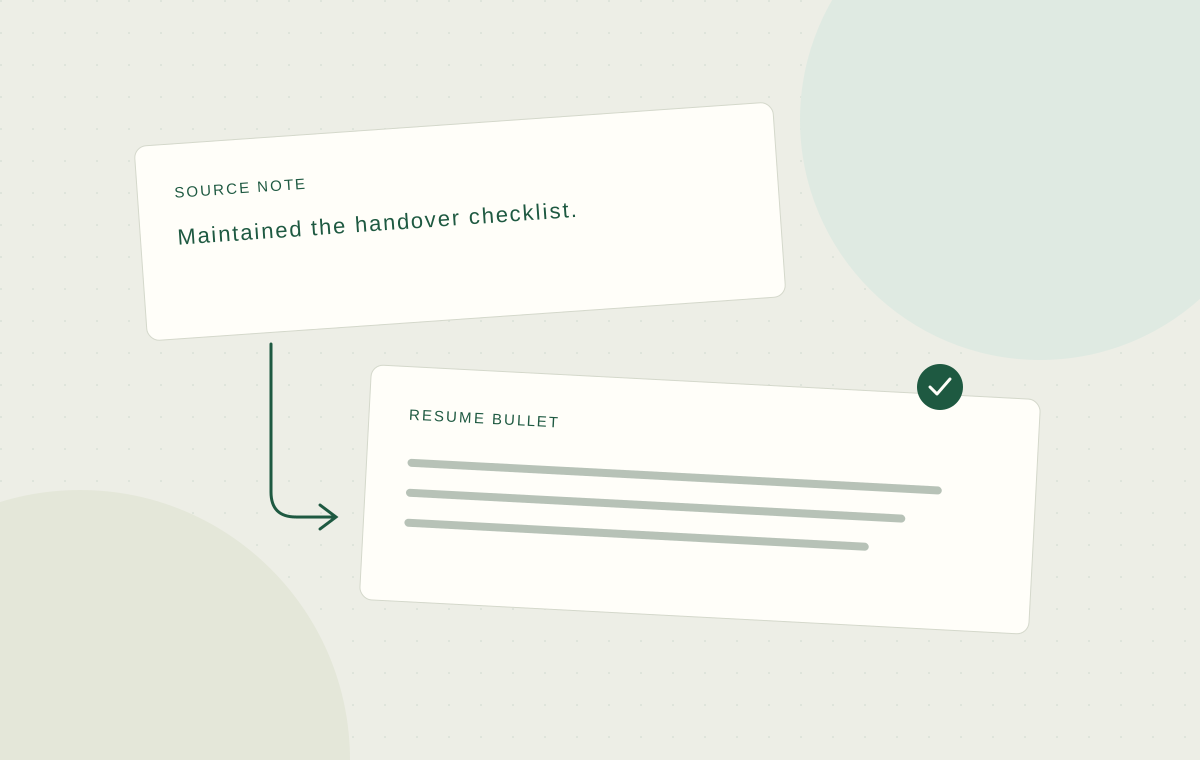
This fictional example concerns a support specialist. They maintained an escalation checklist and used it in shift handovers. Their team did not measure the effect on resolution time.
Maintained an escalation checklist for shift handovers, documenting next steps for open customer cases.
The revision gives the reader a deliverable and a purpose. “Improved efficiency” disappears because the source facts do not establish that outcome.
Choose a verb that matches your responsibility
Choose verbs that describe the responsibility you actually held. If you prepared analysis for a manager’s decision, “analyzed,” “prepared” or “recommended” may be more accurate than “led” or “owned.”
Avoid reducing your contribution to “helped” when you can name it. “Helped launch a website” could mean writing copy, testing the checkout or managing the release. State the part you did. It makes the bullet more specific without claiming the whole project.
When a team achieved a result, connect your contribution carefully: “Tested the checkout flow before the team’s website launch” says what you did and where it fitted. Add a launch outcome only if you can verify it.
Review AI suggestions against the source notes
Give a writing tool the facts you have and ask it to preserve them. Specify that missing measurements should stay missing. Read its output for changes to scope as well as invented numbers. “Created a dashboard” and “built the company’s reporting strategy” are different claims.
You can use this instruction: “Rewrite these notes as a concise resume bullet. Use only the supplied facts. Do not add metrics, tools, leadership responsibility or outcomes. Tell me separately if more context would help.”
Read the final bullet aloud and imagine the interviewer asking how you did it. If you can explain the work, the choices you made and the limits of what you measured, you have a useful sentence to work with.
Before you move on
0 of 4 checkedUse this checklist for the application you are working on.
Sources and further reading
Resume guidance on accomplishment statements. The examples and review method on this page are Evarlio teaching material.
Examples are fictional teaching material created by Evarlio. They are not customer stories or reported hiring outcomes.