The practical answer
Read the responsibilities, match them to work you have actually done, and give the strongest matches more space. Keep your titles, dates and level of ownership accurate.
Start with the work the employer needs done
Read the whole posting before editing your resume. Separate the day-to-day responsibilities from the required qualifications and the nice-to-haves. Benefits and company slogans do not tell you what to put in an experience bullet.
Choose a few responsibilities that seem central to the job. A requirement repeated in the responsibilities and qualifications deserves attention, but frequency alone does not make it the most important one. A license mentioned once may still be mandatory.
For a marketing operations role, the useful phrases might be campaign reporting, CRM data quality and coordination with sales. Keep that shortlist beside your resume. It gives the edit a purpose and stops every sentence from becoming a new writing project.
Build a small requirement-to-evidence table
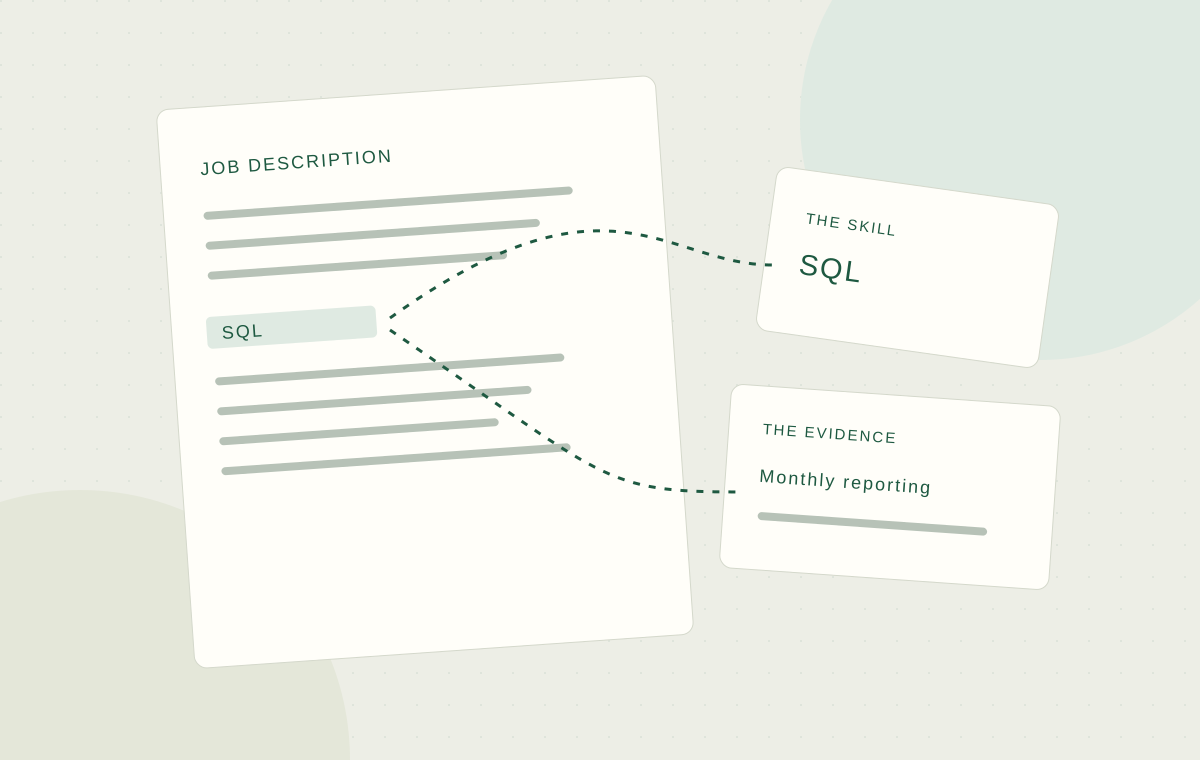
For each requirement, write down a project, responsibility or deliverable that supports it. Add where the evidence comes from: a report you made, a process you maintained or a decision you can explain. If you cannot find an example, leave that row as a gap.
The following is a fictional teaching example. The applicant has worked with campaign reports and CRM records, but has never administered Salesforce. Those facts stay the same throughout the rewrite.
| Job requirement | Available evidence | Resume decision |
|---|---|---|
| Campaign reporting | Prepared weekly campaign reports in Excel | Describe the reports and who used them |
| CRM data quality | Checked duplicate contact records before imports | Include the actual data-quality task |
| Salesforce administration | No administration experience | Leave it out; do not rename general CRM work |
Rewrite from the evidence you already have
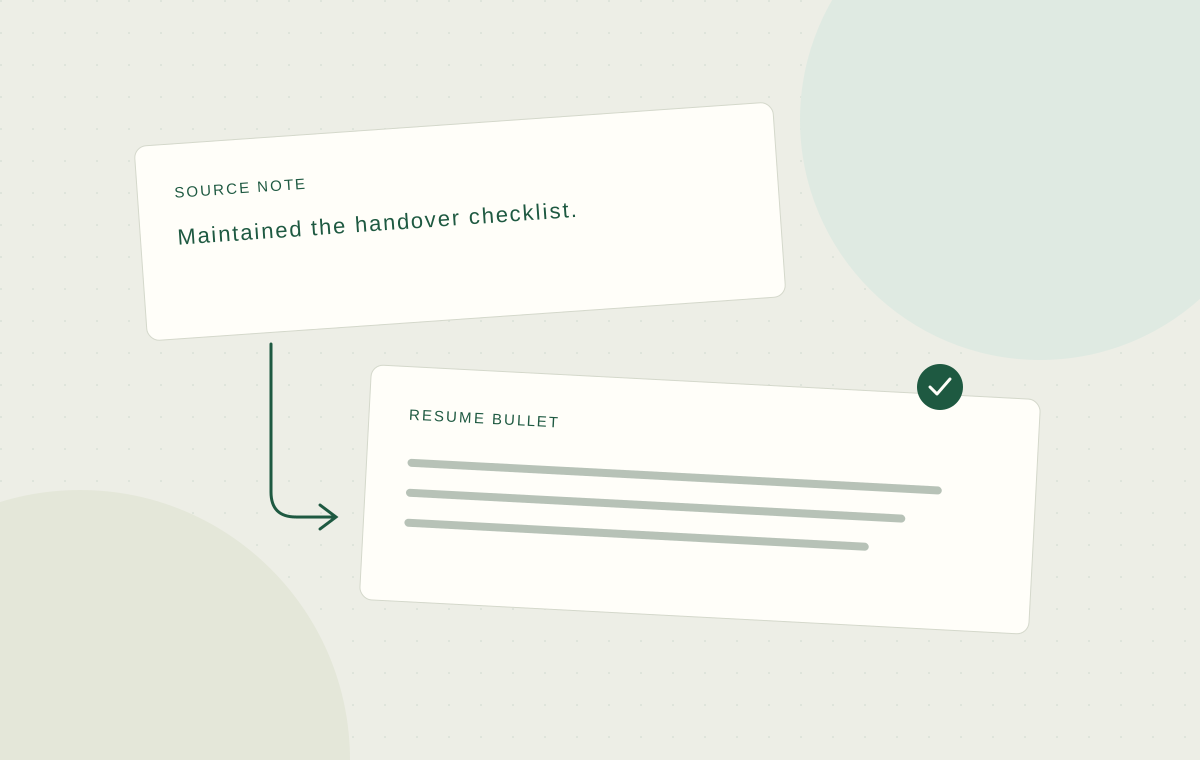
A useful edit makes the work easier to understand. Name the task and the relevant tool, then explain its purpose or a result you can support. You do not need to squeeze every requirement into a single bullet.
Prepared weekly email campaign reports in Excel so the sales team could prioritize lead follow-up.
The edit names the cadence, tool and use of the report. It does not add a revenue increase, a leadership role or software the applicant has not used.
Give relevant experience more room
Move the most relevant bullet toward the top of its role. Keep your employment history in a clear order, usually most recent first, so the reader can follow your career. An older project can also appear in a separate projects section when it deserves more attention.
Trim repetitive duties before deleting context the reader needs. A less relevant job can still explain a period of employment or show a skill the posting asks for. It may need one concise bullet instead of a full paragraph.
Review the skills section after the experience section. Include terms from the posting when they accurately describe your knowledge. Keep your official job titles intact; if a title is unusual, a short explanation can clarify the function without suggesting a promotion.
Check the version you will actually submit
Read the finished resume next to the job posting. Can you point to evidence for the main responsibilities? Can you explain every claim in an interview? Fix any sentence whose wording makes your contribution sound larger than it was.
Save this version with the job record. When an interview arrives weeks later, you will want the exact resume and posting you used. A master career profile is useful for future applications; the submitted version tells you what this employer has seen.
If you use AI to help with the edit, compare its draft with your source facts. A plausible phrase such as “owned the strategy” can change the meaning of work you only supported. Review the verbs as carefully as the numbers.
Before you move on
0 of 4 checkedUse this checklist for the application you are working on.
Sources and further reading
Guidance on resume content, formatting and tailoring to a specific application.
Examples are fictional teaching material created by Evarlio. They are not customer stories or reported hiring outcomes.